BUILDING SIGNAGE AND VISUAL INFORMATION SYSTEMS (VIS) – DESIGN, PRODUCTION AND INSTALLATION
Building signage as a strategic decision.


If you don’t want to return to the topic of signage after the building is completed and expect it to work without corrections or improvisation, this model is the only sensible solution.


Building signage as a strategic decision

WHAT YOU ACTUALLY GET

– visual information system (VIS) design
– production of signage elements
– installation and final system completion

Everything delivered in one fully controlled process.

RESPONSIBILITY

We do not sell individual elements.

We take responsibility for how the building functions, how it is perceived, and how it operates in everyday use.

OPERATIONAL DECISION

For the investor, this means one thing:
– signage is no longer a variable
– it becomes a closed operational decision.

  • What you realistically get
  • Responsibility
  • Operational decision

Process and way of working

HOW WE WORK WITH VISUAL INFORMATION SYSTEMS

– design, production, and installation on one side
– no decision gaps between stages
– no shifting of responsibility

PROCESS RESPONSIBILITY

If any part of the system fails to perform its function:
– you don’t look for someone to blame
– responsibility is clear

  • How we work
  • Responsibility of the process

Design, use and durability

SIGNAGE DESIGN

FOR REAL BUILDING USE

The visual information system is created:
– based on real user movement scenarios
– with consideration of the building’s function and rhythm
– without designing “based on declarations”

Signage must work in practice, not only on paper.

MATERIAL DECISIONS BUILT TO LAST

– selection of durable, legible solutions for the long term
– elimination of materials and forms that do not age well
– design for long-term use

Signage must retain clarity and purpose over the years,
not just for a season.

A CLOSED PROCESS WITHOUT LAST-MINUTE IMPROVISATION

– no random compromises at the final stage
– no “rescuing” the project after installation
– no decisions made under time pressure

The final result is:
– predictable
– structured
– consistent throughout the entire building

  • Utility design
  • Material decisions
  • Closed process

Final result and guarantee

FINAL RESULT CONTROL

The final result is:

– predictable
– structured
– consistent throughout the entire building


We do not finish our work with the delivery of elements. We finish it when the visual information system functions as a whole.

PRETENDE GUARANTEE

We do not guarantee individual products.
We guarantee the performance of the visual information system after implementation. This means:
– a guarantee of visual consistency throughout the entire building
– a guarantee of legibility in real-world use
– a guarantee of compatibility with the building’s architecture
– a guarantee of long-term validity of design decisions

If any element of the system fails to perform its intended function, it is our responsibility — not yours.

RESULT AFTER IMPLEMENTING THE SIGNAGE SYSTEM

After the project is completed, the signage:

– guides users intuitively and without frustration
– organizes the space informationally and visually
– strengthens the perception of the building as well-thought-out and professional
– does not require constant corrections or after-the-fact decisions
– supports the building’s image for years


This is not a purchase.
It is the stabilization of the building’s operational and perceptual standard.

WHO THIS OFFER IS FOR


This offer is for investors and property managers who:
– think about the building in a long-term perspective
– expect a predictable result instead of improvisation
– do not want to coordinate multiple contractors
– treat signage as an element of the building’s overall quality

This is not a solution for projects where:
– price is the only criterion
– signage is meant to be “just good enough”

SCOPE OF PRETENDE’S RESPONSIBILITY

– one team responsible for the entire process
– one decision instead of multiple approvals
– one standard of the final result

If signage is meant to:
– work without corrections
– support users and architecture
– not return as an issue after project completion

then this model is not one of many options. It is a ready-to-decide offer.

  • Control of the final result
  • PRETENDE Guarantee
  • Effect after implementation
  • Who this offer is for
  • PRETENDE responsibilities

Wayfinding - spatial orientation and signage systems

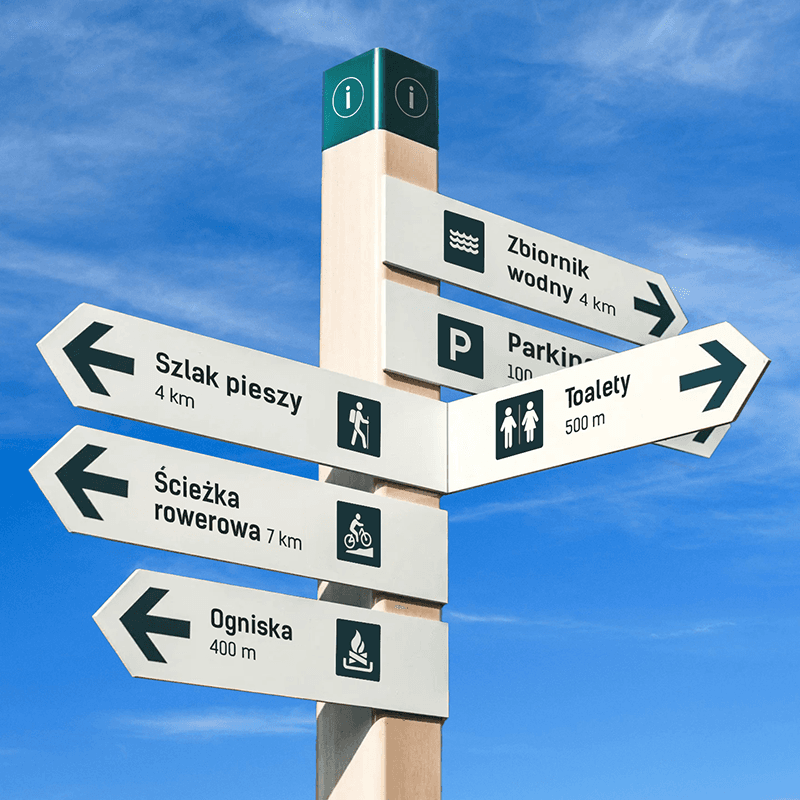
Wayfinding is a system of spatial orientation and visual information whose purpose is to enable users to move independently, intuitively, and safely within a given environment — without the need for additional instructions, assistance, or explanations. PRETENDE Wayfinding is a service covering the design, production, and implementation of spatial orientation systems, delivered under a single responsibility and within one coherent process. A wayfinding system operates through the logical placement of information, a clearly defined hierarchy of messages, and formal consistency throughout the entire space.

Wayfinding system - working principle and solution structure

PRETENDE system scope and responsibilities

SYSTEM LOGIC.

WHY SIGNAGE SYSTEMS
END IN CHAOS


and how to design them to function as one cohesive system

In many projects, signage is created as a collection of individual elements. In practice, the user does not experience isolated elements, but an entire information system within the space that guides them through the architecture.


The user does not experience signage.
They experience a system that guides them through the space.

The most common mistakes in space signage

The most common mistakes in space signage

SIGNAGE DESIGNED AT THE END OF THE PROJECT

Wayfinding decisions are made only after the architectural design is completed, when the building layout no longer allows for a proper system to be designed — signage starts fixing problems instead of guiding the user.

The most common mistakes in space signage

LACK OF USER MOVEMENT ANALYSIS

The information system is created intuitively, without analyzing real movement within the space — instead of guiding the user, it forces them to make decisions.

The most common mistakes in space signage

SEPARATION OF DESIGN, PRODUCTION, AND IMPLEMENTATION

Different parties are responsible for each stage — the coherence of the system stops being anyone’s responsibility.

The most common mistakes in space signage

LACK OF A SYSTEMIC STRUCTURE

Information in the space is created as a collection of individual elements — instead of guiding the user, it generates chaos that someone later has to manage.

The most common mistakes in space signage

NO ANALYSIS OF DECISION POINTS

Places where the user must make decisions are not identified — instead of guiding, the system leaves the user exactly where they should not stop.

The most common mistakes in space signage

LACK OF INFORMATION HIERARCHY

All messages have similar weight — instead of being guided, the user has to decide what is important at any given moment.

The most common mistakes in space signage

NO CONNECTION WITH ARCHITECTURE

The wayfinding system is not designed as part of the architecture — instead of guiding the user, it operates alongside the space and loses credibility.

The most common mistakes in space signage

LACK OF PREPARATION FOR BUILDING CHANGES

Changes in room functions create informational chaos — instead of working effectively, the system requires constant management and repeated revisions.

Signage works only when all its elements are designed as part of a single coherent spatial information system that guides the user in a clear and intuitive manner.

SYSTEM PROCESS

SYSTEM PROCESS

Most signage begins with board design. We begin by understanding the space. First, we analyze the building’s architecture and the flow of people. Next, we design the information structure—the logic of orientation throughout the entire environment. Only at the very end do we create the physical elements of the system: signs, directions, and markings. As a result, the signage is not just an addition to the building; it becomes an integral part of its architecture and spatial logic.

ANALYSIS

SPACE ANALYSIS

Recognize architecture layout and user decision points.

#

01

PROJECT

INFORMATION STRUCTURE

Design of message hierarchy and guidance logic in the space.

#

02

SYSTEM

COMPONENTS OF THE SYSTEM

Directional signage, identification of places, orientation boards.

#

03

IMPLEMENTATION

SYSTEM IMPLEMENTATION

Production and installation of components as parts of one cohesive system.

#

04

Pricing of Visual Information Systems (VIS)

Pricing is not based on a price list, but on the function and scale of the building. The project scope is defined based on real usage.

Pricing requests are handled exclusively via email or the contact form.

HOTEL SIGNAGE – SELECTED PROJECTS

Hotel signage is not decoration. It is an operational decision that affects the functioning of the property, guest comfort, and the hotel’s image in the long term. We deliver comprehensive hotel signage systems in a single, closed process — from design, through production, to installation — executed under one implementation standard. One responsibility. One process. One predictable result.
We deliberately do not separate design, production, and installation between different parties, as this model generates inconsistencies and correction costs that become apparent after the property opens. We design repeatable systems that are clear for guests and can be applied in future investments without loss of standard. The final result is predictable — without surprises and without coordination risks.

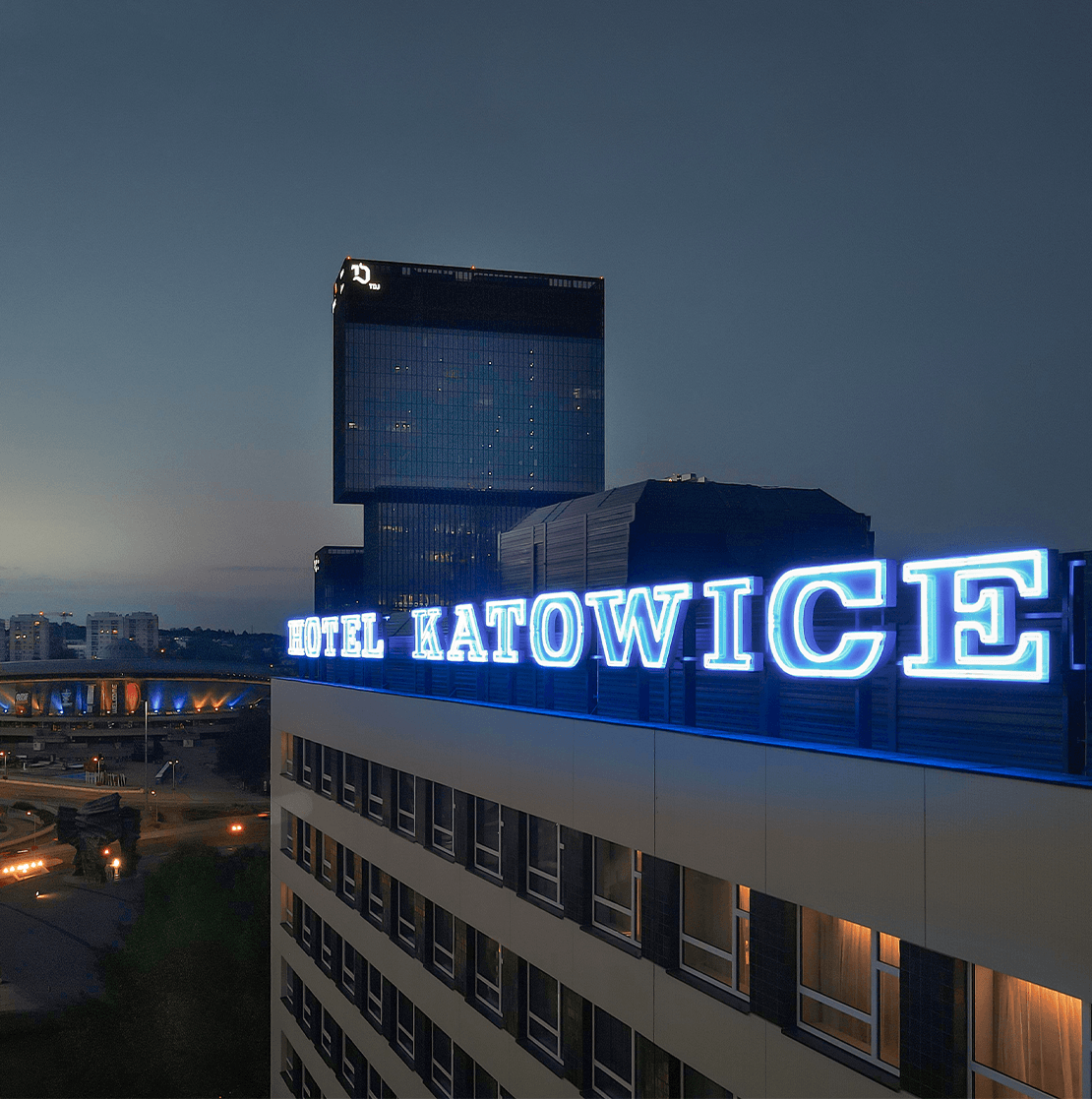
HOTEL KATOWICE

READ MORE

Hotel Saski Kraków

READ MORE

Mazury Lake Hill

READ MORE

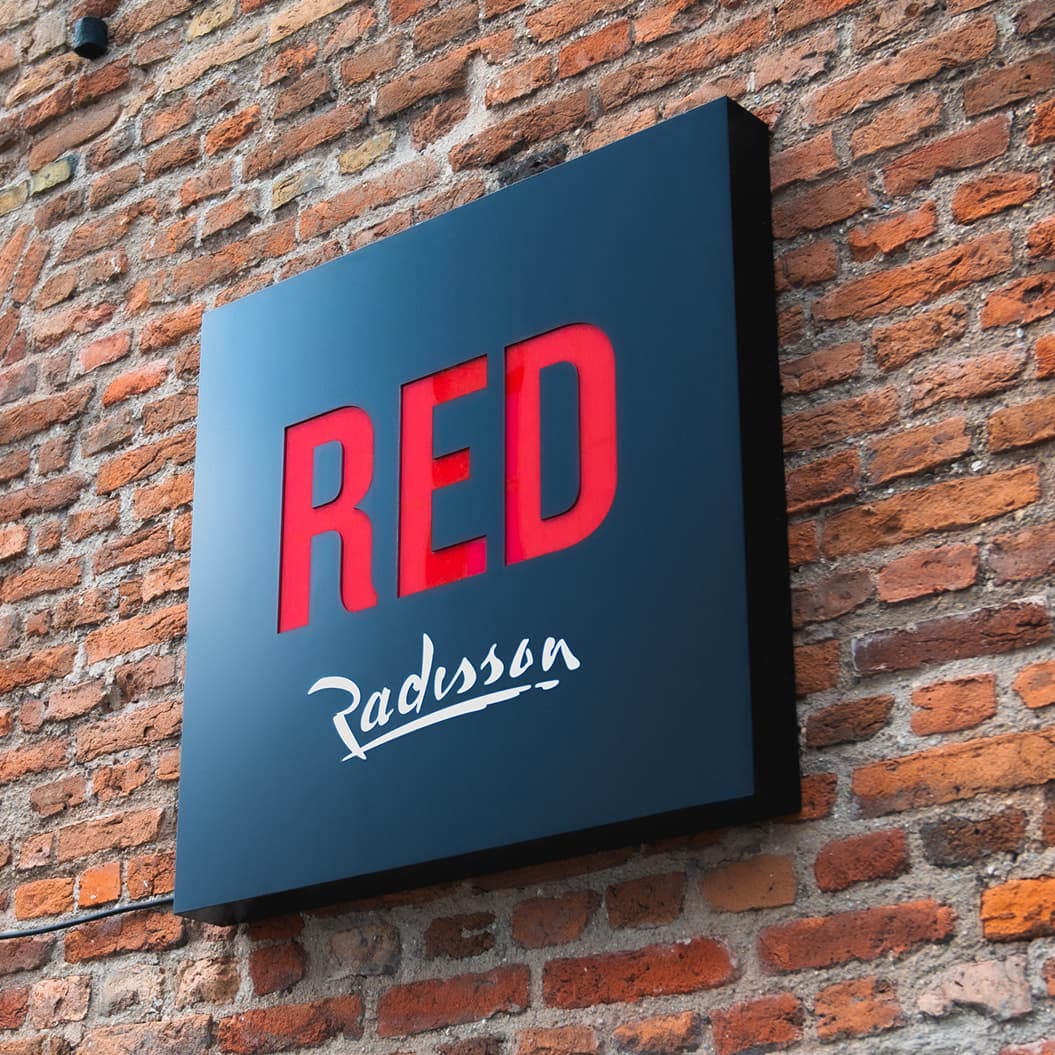
RADISSON RED

READ MORE

Hotel Number One

READ MORE

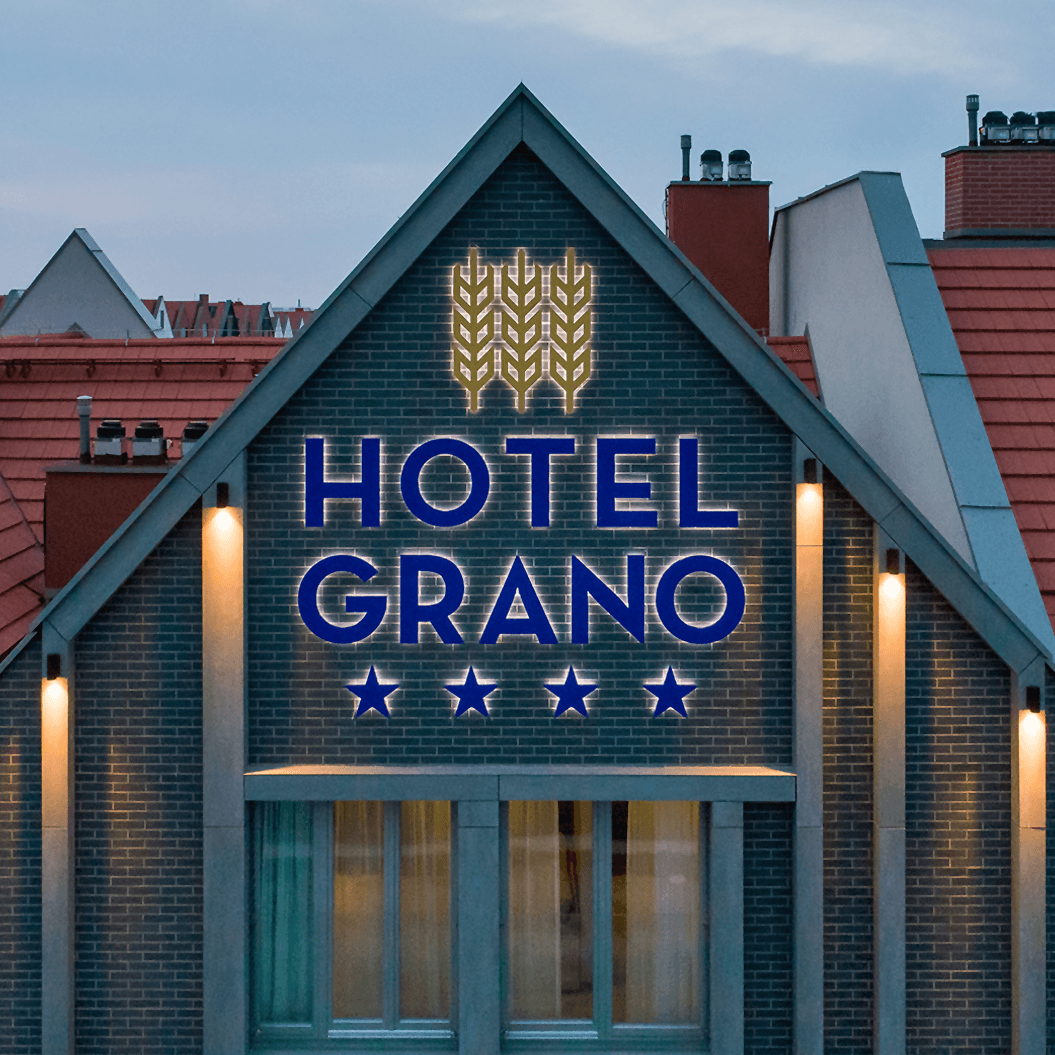
Hotel Grano

READ MORE

Hi. Hotel

READ MORE

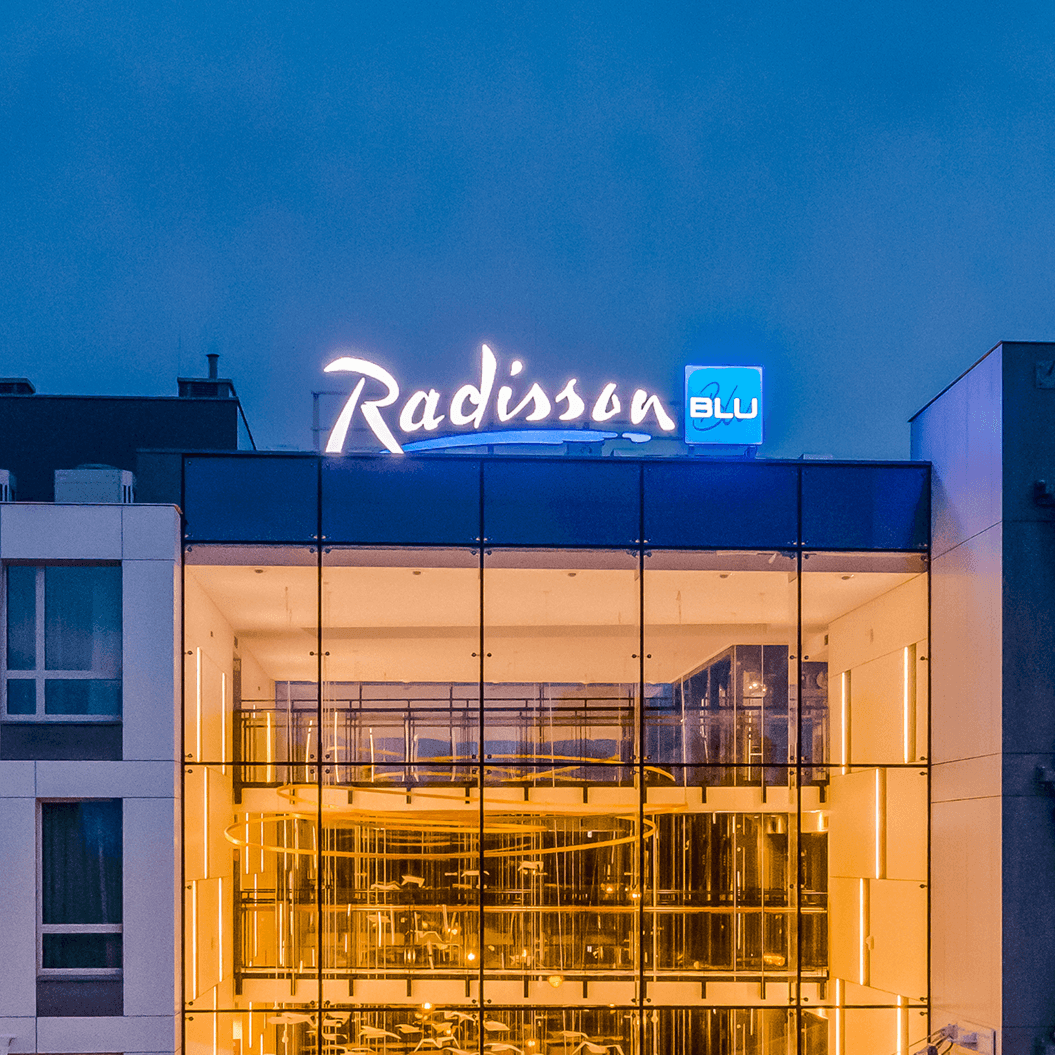
Radisson Blu

READ MORE

Transcription

Imagine walking into a massive office building and suddenly realizing you have no idea where to go. Frustrating, isn't it? That's exactly why visual information systems are so crucial in modern architecture.

Information Art for Orientation

Pretende

0:00 / 8:44

LED video display letters

Industrial metal letters

American Dream

Neon signs

Prismatic letters

PRETENDE SIGNAGE SYSTEMS IN REAL ARCHITECTURE

Different technologies. One responsibility. One standard of result.Explore the full spectrum of signage systems:
from lightboxes and pylons, through façade systems, to interior signage and wayfinding.

STAY
WITH US

JOIN PRETENDE INSIDER

Information on projects available exclusively to the PRETENDE Insider group - in advance of the market.